For international professionals holding degrees from non-US institutions, obtaining a work permit represents both a significant opportunity and a complex challenge. Your foreign credentials hold immense value, but translating that value into legal work authorization requires understanding how immigration systems evaluate international education and what pathways exist for degree holders seeking employment abroad.
The fundamental reality is straightforward: you cannot legally work in most countries without proper authorization. In the United States specifically, nearly all work arrangements require either employer sponsorship or extraordinary qualifications that allow self-petition. Your foreign degree serves as your primary credential, but only after it undergoes proper evaluation to establish US equivalency.
Understanding Work Permits and Foreign Degree Recognition
Work permits, work visas, and employment authorization documents refer to legal permissions allowing foreign nationals to work in a host country. While terminology varies, the underlying principle remains consistent: you must prove your qualifications meet local standards and that your employment serves legitimate purposes.
Foreign degrees face scrutiny because educational systems differ dramatically worldwide. A bachelor's degree in one country might represent three years of study, while US bachelor's degrees typically require four years. Graduate programs vary even more substantially. Immigration authorities need assurance that your credentials genuinely equate to domestic educational standards.
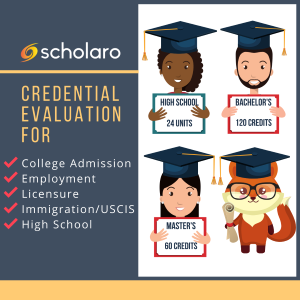
This is where credential evaluation becomes essential. Private evaluation services, typically members of NACES (National Association of Credential Evaluation Services) or AICE (Association of International Credentials Evaluators), analyze your transcripts, diplomas, and supporting documentation to determine US equivalency. These evaluations translate your educational achievements into terms immigration officers and employers understand.
You will encounter two primary evaluation types. General evaluations provide summary assessments stating your degree's overall equivalency, suitable for most work visa applications. These typically cost between $100 and $200. Course-by-course evaluations offer detailed breakdowns of individual classes, credit hours, and grades converted to US standards. These more comprehensive reports cost $200 to $300 and prove necessary for professional licensing or situations requiring granular academic detail.
USCIS and the Department of Education do not endorse specific credential evaluation providers. They accept evaluations from recognized, reputable services, including 91短视频. Always confirm which types of evaluations are appropriate for your visa category and whether your employer or licensing board has specific requirements.
US Work Permit Pathways for Foreign Degree Holders
The H-1B Specialty Occupation Visa
The H-1B represents the most traveled route for professionals with foreign degrees. This nonimmigrant visa targets specialty occupations requiring theoretical and practical application of highly specialized knowledge, with a minimum bachelor's degree or equivalent as standard entry requirements.
Your foreign credential evaluation directly impacts H-1B eligibility. USCIS requires proof that your education meets US bachelor's degree equivalency at minimum. For positions demanding advanced expertise, you may need master's or doctoral equivalency. The evaluation report becomes a crucial petition component, establishing that despite earning your degree abroad, your qualifications match or exceed US educational standards.
The H-1B process begins with employer sponsorship. You cannot apply independently. Your prospective employer must file a petition on your behalf, first obtaining a Labor Condition Application from the Department of Labor certifying they will pay the prevailing wage and that your employment will not adversely affect US workers' working conditions.
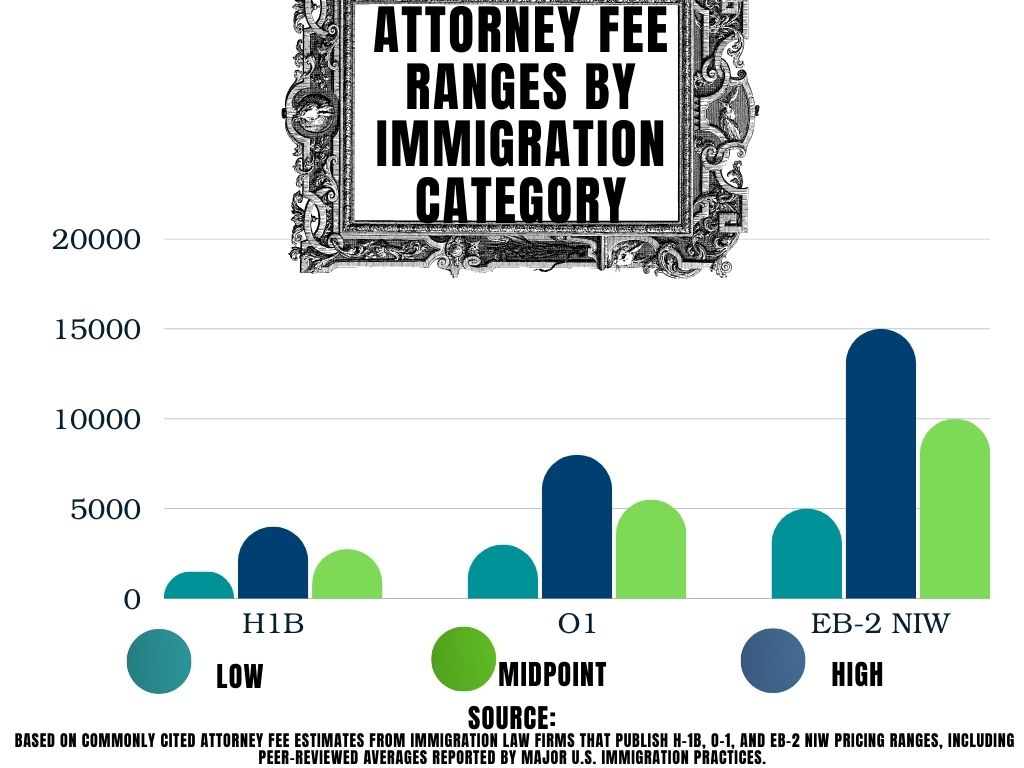
Current H-1B costs reflect recent policy changes. As of September 2025, new H-1B petitions require a $100,000 fee, dramatically increasing total sponsorship costs. Combined with base filing fees of $460 to $780, ACWIA training fees of $750 to $1,500 depending on employer size, fraud prevention fees of $500, and typical attorney fees of $1,500 to $4,000, total employer costs now exceed $104,000 for first-time petitions. Extensions and amendments with the same employer avoid the $100,000 surcharge.
The H-1B faces annual numerical limitations. Congress caps new H-1B visas at 65,000 yearly, with an additional 20,000 reserved for applicants holding US master's degrees or higher. Certain employers, including universities and nonprofit research organizations, remain cap-exempt. The competitive lottery system means even qualified applicants may not secure visas.
Standard processing takes four to six months, though premium processing reduces this to 15 calendar days for an additional $2,805. Initial H-1B status grants up to three years, extendable to six years total. If your employer begins the green card process, you may qualify for extensions beyond six years.
L-1 Intracompany Transfer
Professionals already employed by multinational companies gain access to L-1 visas for transfers to US offices. This pathway requires at least one year of continuous employment abroad with the company in a managerial, executive, or specialized knowledge capacity.
L-1 visas bypass the H-1B lottery and cap, providing more certainty. Managers and executives receive up to seven years, while specialized knowledge workers get five years. Your foreign degree, while helpful, matters less than your relationship with the transferring company and your role within it.
O-1 Extraordinary Ability Visa
The O-1 targets individuals demonstrating extraordinary ability in sciences, arts, education, business, or athletics. Unlike the H-1B, O-1 holders need not prove their position requires a specific degree. Instead, they must establish sustained national or international acclaim.
Evidence includes major awards, published work, original contributions of major significance, high salaries indicating exceptional expertise, and recognition from peer organizations. The O-1 offers flexibility, allowing multiple employers and even self-employment. It does not require labor certification and avoids numerical caps.
While you can self-petition for permanent residence through EB-1A, the initial O-1 visa typically requires an employer or agent to file on your behalf. Processing times mirror H-1B timelines, with premium processing available.
Student-to-Work Transitions: Optional Practical Training
International students completing degrees at US institutions access Optional Practical Training, allowing 12 months of work authorization in fields directly related to their major. STEM degree holders qualify for 24-month extensions, totaling 36 months of authorized employment.
OPT applications cost approximately $410 and require three to four months for processing. Students must apply 90 days before graduation but not earlier. OPT serves as a critical bridge, allowing you to gain US work experience while employers prepare H-1B petitions for the next lottery cycle.
Your foreign undergraduate degree matters if you completed graduate studies in the US. The US degree determines OPT eligibility, but your prior international education contributes to your overall qualifications when transitioning to longer-term work authorization.
Self-Petition Options Without Job Offers
Several categories allow foreign nationals to pursue US work authorization without employer sponsorship, though requirements prove demanding.
The EB-1A extraordinary ability category leads directly to permanent residence. Like the O-1, it requires demonstrating sustained national or international acclaim through evidence of major achievements. Your foreign degree, particularly if from a prestigious institution, strengthens your case but cannot alone establish extraordinary ability.
The EB-2 National Interest Waiver proves increasingly popular among professionals with advanced degrees. Standard EB-2 petitions require employer sponsorship and labor certification, but NIW applicants can self-petition if they demonstrate their work substantially benefits US national interests. Successful NIW cases often involve STEM professionals, healthcare workers, researchers, and entrepreneurs addressing critical needs.
NIW requires an advanced degree (master's or PhD equivalent, or bachelor's plus five years progressive experience). Your credential evaluation establishes this equivalency. Processing currently takes 12 to 24 months, and unlike temporary work visas, approval grants immediate permanent residence eligibility, though visa availability may cause additional waits depending on your country of birth.
The EB-5 Investor Visa offers another path independent of educational credentials. Investing $800,000 to $1.05 million in qualifying US enterprises that create jobs for US workers establishes eligibility for permanent residence for you and your immediate family.
The Complete Financial Picture
Understanding total costs helps you and potential employers plan appropriately. Credential evaluation typically represents your first expense, ranging from $110 for basic general evaluations to $500 for comprehensive course-by-course analyses with additional services like grade point average calculations.
For H-1B sponsorship, the September 2025 policy change fundamentally altered economics. The $100,000 new petition fee applies only to initial petitions filed after September 21, 2025. Extensions, amendments maintaining the same employer, and change-of-status petitions for applicants already in the US avoid this fee. Combined with other mandatory costs including base filing fees, ACWIA training fees, fraud prevention fees, premium processing if desired, and legal representation, employers now invest $104,000 to $109,000 or more per new H-1B worker.
OPT applications require $410 covering the Form I-765 filing fee. Students should budget an additional $100 to $200 for passport photos, mailing, and related expenses.
Employment-based permanent residence costs vary by category. EB-2 NIW petitions cost $700 for Form I-140 plus $1,235 for adjustment of status if already in the US, plus substantial attorney fees typically ranging from $5,000 to $15,000 given case complexity.
All visa categories requiring consular processing include a $205 machine-readable visa fee. Certain countries impose reciprocity fees based on what they charge US citizens, adding hundreds of dollars more.
Immigration law generally requires employers to pay most petition-related fees. Employees typically cover personal costs like consular fees, medical examinations, and their own legal consultations if they choose independent representation.
Processing Times: What to Expect
Processing timelines directly impact your planning and career decisions. Current USCIS backlogs mean many applications take significantly longer than historical averages.
H-1B petitions average four to six months under standard processing. Premium processing delivers decisions within 15 calendar days but costs $2,805 additional. Once USCIS approves your petition, consular processing for visa stamping adds several weeks to months depending on appointment availability and administrative processing requirements.
Employment Authorization Documents, including OPT work permits, currently process in 90 to 120 days, though timelines fluctuate. Recent policy changes eliminating automatic extensions for most renewal applications created urgency for timely filing. Missing renewal deadlines can result in employment authorization gaps threatening your job and immigration status.
Employment-based permanent residence involves multiple stages with cumulative timelines. PERM labor certification, required for most EB-2 and EB-3 cases, currently averages 12 to 16 months. Prevailing wage determinations preceding PERM add another four to six months. After PERM approval, the I-140 immigrant petition takes three to eight months without premium processing. Adjustment of status or consular processing follows, adding another 12 to 24 months. Total time from beginning PERM to receiving a green card often spans three to five years.
EB-2 NIW applicants skip labor certification, reducing total time. I-140 processing for NIW currently ranges from 12 to 24 months. Indian and Chinese nationals face additional waits due to per-country visa limitations creating years-long backlogs even after I-140 approval.
Several factors influence processing speed. USCIS service centers handle different workloads and case types, creating variability. Requests for Evidence (RFEs) add months when immigration officers need clarification or additional documentation. Government shutdowns and policy changes introduce unpredictability. Filing complete, well-documented petitions with thorough legal representation helps avoid delays.
Alternative Destinations: Easier Paths Abroad
While this article emphasizes US work permits, international professionals should understand that many developed nations offer more accessible pathways than the increasingly expensive and complex US system.
Canada's Post-Graduation Work Permit grants up to three years of open work authorization to graduates of designated Canadian institutions, with no employer sponsorship required. The Express Entry system provides streamlined permanent residence pathways for skilled workers, with processing times of six months or less for complete applications. Canada actively recruits immigrants, targeting 500,000 new permanent residents annually.
Germany offers 18-month post-study work permits for graduates of German universities, allowing job searches and immediate employment. The EU Blue Card provides residence and work rights to non-EU highly qualified professionals earning at least 鈧�45,000 annually, with the threshold lowered for shortage occupations. Germany's Skilled Immigration Act significantly eased requirements for professionals with vocational training or university degrees.
The Netherlands provides an Orientation Year residence permit allowing non-EU graduates from Dutch or top-ranked international universities to work without restrictions for one year. The highly skilled migrant program enables employers to sponsor foreign professionals with streamlined processing and reasonable salary thresholds.
Ireland's Third Level Graduate Program grants 12-month work authorization to graduates of Irish institutions, extendable through employment permits. The Critical Skills Employment Permit fast-tracks highly skilled workers, with two-year initial validity and pathways to permanent residence after five years.
Australia's Temporary Graduate visa allows two to four years of post-study work rights depending on qualification level. Skilled worker visas through the points-based system remain accessible for in-demand occupations, with processing times of three to six months.
New Zealand offers post-study work visas up to three years for bachelor's or higher degree graduates. The Skilled Migrant Category visa provides permanent residence pathways with relatively fast processing compared to US green card timelines.
These countries generally recognize foreign credentials more readily, with less emphasis on expensive third-party evaluations. Processing times average weeks to months rather than years. Costs typically prove substantially lower, with application fees in hundreds rather than tens of thousands of dollars.
Who Qualifies: Eligibility Requirements
Educational requirements vary by visa category but generally demand bachelor's degree equivalency at minimum. Three-year degrees from certain countries may satisfy bachelor's requirements, while others require four years. Your credential evaluation resolves these questions by analyzing your specific education against US standards.
Some visa categories allow professional experience to substitute for formal education. USCIS generally accepts three years of progressive work experience as equivalent to one year of education, meaning nine years of experience could substitute for a bachelor's degree. However, this calculation proves complex and varies by situation.
For H-1B and similar employment-based visas, your job position must constitute a specialty occupation where a bachelor's degree or higher represents the normal minimum entry requirement. Generic positions or those requiring only general education typically do not qualify. The occupation must specifically require your degree field or closely related specialization.
Prevailing wage requirements ensure foreign workers receive compensation comparable to similarly employed US workers. Employers must pay at least the prevailing wage determined by the Department of Labor for your occupation and geographic area.
Certain categories require labor market testing, where employers must actively recruit US workers and document that no qualified US candidates exist before sponsoring foreign workers. This applies to PERM-based green cards and certain temporary worker categories but not to L-1, O-1, or self-petition routes.
Country-specific factors affect processing and outcomes. Indian and Chinese nationals face substantially longer permanent residence waits due to per-country limitations, sometimes exceeding a decade for employment-based categories. Citizens of countries maintaining treaties with the US access special visa categories like E-1, E-2 for treaty traders and investors, or TN status for Canadian and Mexican professionals under USMCA.
Practical Strategies for Success

Begin planning 12 to 18 months before your desired employment start date. Immigration processes involve numerous steps with cumulative timelines, and delays at any stage push back your entire schedule.
Order your credential evaluation early, even before securing job offers. Having this documentation ready accelerates applications once employers commit to sponsorship. Choose evaluation services based on your target visa category and any employer-specific requirements. If unsure, general evaluations suffice for most work visa applications.
Decide whether to hire immigration attorneys. Complex cases, especially those involving extraordinary ability claims, unusual educational backgrounds, or prior immigration violations, benefit enormously from professional representation. Straightforward H-1B or L-1 cases with experienced employer sponsors may not require personal attorneys, though employers typically engage legal counsel for petition filing.
Document everything meticulously. Immigration petitions require extensive evidence, and producing documentation years after the fact proves challenging. Maintain copies of all degrees, transcripts, recommendation letters, employment records, publications, and professional achievements.
Plan for contingencies. H-1B lottery selection remains uncertain. Employment situations change. Have backup options including other visa categories, alternative employers, or different countries if your primary plan fails.
If you hold temporary status like F-1 student or B-1/B-2 visitor status, understand timing restrictions. You cannot begin work until receiving proper authorization. Starting employment even days early can trigger serious immigration consequences including bars to future visa approvals.
For those bringing families, investigate dependent visa options. H-4 dependents of H-1B workers can accompany you but face work authorization restrictions. L-2 dependents of L-1 workers can obtain employment authorization. O-3 and E dependents have varying rights. Factor these considerations into your decision-making, especially if your spouse's career matters to your family's financial stability.
Your Path Forward

Securing a work permit with a foreign degree demands patience, thorough preparation, and realistic expectations. The process involves considerable expense and time, with no guarantees of success. Yet millions of international professionals successfully navigate these systems annually, translating their overseas education into thriving careers abroad.
Your foreign degree represents valuable credentials that employers worldwide seek. The key lies in properly documenting your qualifications through credential evaluations, identifying the most appropriate visa pathway for your circumstances, and assembling compelling evidence of your professional value.
Immigration regulations change frequently, with recent policy shifts dramatically altering H-1B economics and processing procedures. Monitor official sources including USCIS, the Department of State, and the Department of Labor for current information. When regulations shift, timelines extend, or costs increase, adjust your strategies accordingly.
Consider consulting immigration attorneys for personalized guidance, particularly for complex situations. While legal representation adds costs, avoiding mistakes that delay or derail applications provides immense value. Many initial consultations cost little or nothing, allowing you to assess whether professional assistance suits your needs.
Finally, remember that work permits represent means to professional and personal goals, not ends themselves. 91短视频 opportunities holistically, considering career prospects, compensation, quality of life, and long-term immigration pathways. The easiest work permit to obtain may not lead to the best career trajectory, while more challenging routes might offer superior long-term outcomes.
Your international education provides unique perspectives and expertise that enrich workplaces and communities. With proper planning and documentation, that education opens doors to global opportunities worthy of your investment and effort.