Introduction

When you look at the highest paying associate degrees for 2026, you鈥檙e looking at short programs that can give you strong earnings without a long study timeline. Many international students choose these options to save money, enter the job market faster, or build a path to a bachelor鈥檚 degree later. These programs focus on technical and healthcare roles that offer high starting pay, steady hiring, and clear career steps.
Associate degrees appeal to you if you want practical training, faster job access, and a smaller financial commitment. You can finish in about two years, gain skills that match employer needs, and qualify for jobs that pay well above typical early-career wages. As an international student, you still need to look at accreditation, licensing rules, and post-study work options in your target country, but the return can be strong. This article breaks down how to judge salary potential, which fields consistently offer higher pay, and what to think about before you apply.
What defines a high paying associate degree
You judge high paying associate degrees by the earnings you can expect in your first few years and how stable the field is by 2026. Pay varies a lot by industry, so you want to focus on fields that tie directly to technical skills, licensing, or medical training. These areas pay more because the work is specialized and employers have steady demand.
Key points to compare:
Typical starting wages in your region
Growth projections for the field
Licensing or certification that raises your pay
How employers value experience over time
How well the degree transfers if you later pursue a bachelor鈥檚
You鈥檒l see that salaries rise fastest in healthcare support, diagnostic technology, engineering technology, and aviation. These fields link your training to a clear job title, so your earnings are less dependent on employer preference and more tied to the skills you bring. For international students, pay potential also depends on visa rules and how easily your credential is recognised, so you need to look at both earnings and eligibility.
Top fields with strong earnings in 2026
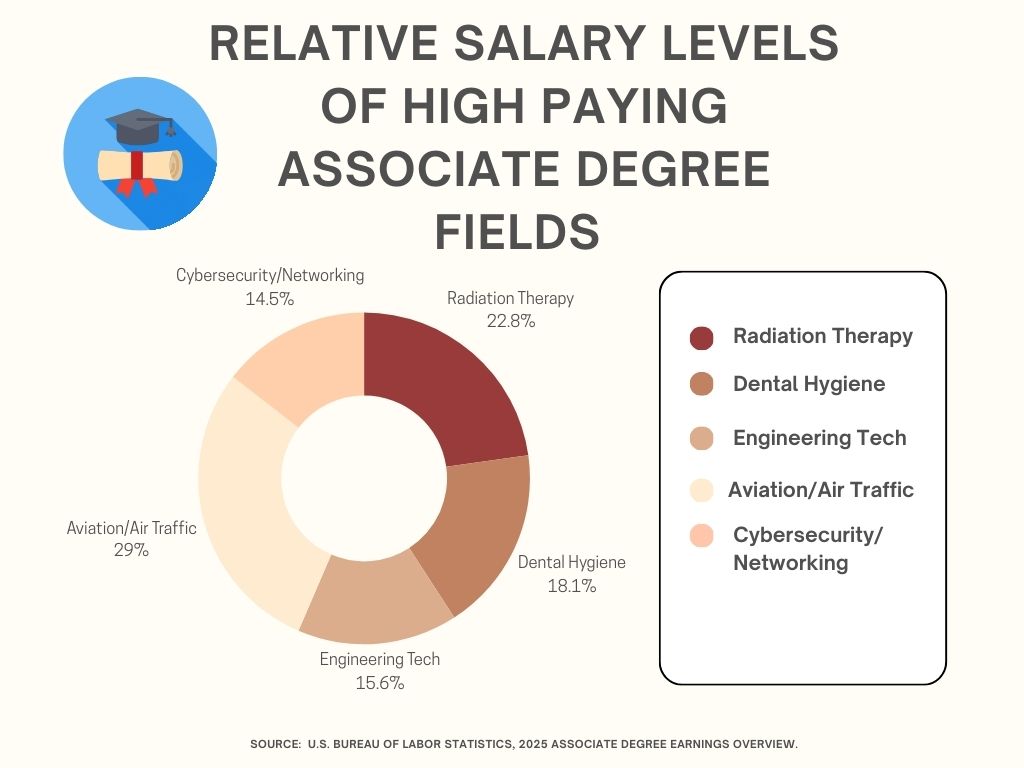
When you look at the highest paying associate degrees, a few fields rise to the top because they offer technical roles with strong wages and steady hiring. These programs give you clear entry points into healthcare, engineering support, and aviation, which are all projected to stay in demand through 2026.
Key fields to consider:
Radiation therapy and diagnostic imaging
You train for roles that support cancer treatment and medical imaging. These jobs pay well, and clinics hire year-round.Dental hygiene
You work directly with patients and build a stable schedule in clinics and private practices. Pay grows quickly with experience.Engineering technology
You support manufacturing, energy, and transportation. Employers hire associate-level technicians because the training matches their equipment needs.Aviation and air traffic services
Some two-year programs lead to high entry-level wages, especially in tower operations and flight systems support.Computer networking and cybersecurity support
Short programs give you targeted skills that help companies handle threats and maintain systems.
These fields pay more because employers look for hands-on training, certification, and graduates who can step into applied roles right away. If you鈥檙e an international student, you should also check licensing rules, work-permit options, and regional hiring trends before you choose a program.
Key considerations for international students
As you compare the highest paying associate degrees, you need to look beyond salary and focus on how each program fits your situation as an international student. Pay matters, but your ability to work, stay in the country, and move into the job market matters just as much.
Main points to review:
Accreditation
You need a program that employers and licensing boards recognise. This affects hiring, visa options, and your ability to transfer credits later.Licensing and certification rules
Many high paying roles require exams or supervised hours. Check if international students qualify, how long the process takes, and the extra costs.Post-study work eligibility
Some associate-level jobs qualify for work permits, some do not. Look at regional rules before committing.Tuition and living costs
Associate programs are shorter, but housing, insurance, transportation, and materials add up. Compare the full cost, not just tuition.Transfer pathways
Some students use an associate degree to step into a bachelor鈥檚 later. If that may be your plan, choose a program with clear credit-transfer routes.
Thinking through these points early helps you pick a degree that matches your goals, your budget, and your long-term plans.
How to compare programs and assess future value in 2026
When you鈥檙e choosing among the highest paying associate degrees, you need a simple way to compare programs. Salary ranges look attractive, but the long-term value comes from the program鈥檚 quality, employer demand, and how easily you can build experience after graduation.
What to review:
Job placement data
You want schools that publish clear numbers on employment rates, starting wages, and where graduates work.Industry partnerships
Programs with clinical sites, labs, or employer connections give you better training and a smoother path into your first job.Regional demand
Pay changes by city and state. A field with strong hiring in one region may be saturated in another. Check labor reports and employer listings.Certification preparation
Many high paying roles require an exam. Pick a program that prepares you directly for those requirements.Technology and facilities
Fields like imaging, engineering tech, and networking need up-to-date labs. Outdated equipment slows your learning and lowers your job readiness.
For international students, add two more filters: whether the job qualifies for a post-study work option and how employers treat sponsorship requests in that field. This helps you judge not only the program cost but also the return you鈥檒l get from it.
Next steps for choosing the right degree in 2026
Once you identify the highest paying associate degrees that interest you, you need a clear plan for applying, budgeting, and preparing for your first year. This stage helps you move from research to action.
Steps to focus on:
Build a shortlist
Pick three to five programs that match your salary goals, visa options, and licensing requirements.Plan your budget
List tuition, housing, transportation, books, insurance, and exam fees. Compare this with expected starting wages so you know your break-even point.Check application requirements
Review English proficiency scores, transcript rules, and document deadlines. Associate programs still follow strict admissions timelines.Prepare for hands-on training
Many high paying fields require labs, clinical hours, or on-site sessions. Factor this into your schedule and transportation plan.Start networking early
Connect with students, advisors, and professionals in your field. Early relationships help you find internships and build employer contacts.
These steps guide you toward a program that fits your goals and gives you a realistic path into a strong-paying career.
Conclusion

High paying associate degrees can give you a fast entry into strong careers in healthcare, engineering technology, aviation, and computer systems. These programs work well if you want practical training, a shorter timeline, and a clear job path. You still need to look at accreditation, licensing rules, and work-permit options, especially as an international student, but the return can be worth the planning.
When you compare programs with real job data, industry demand, and long-term growth in mind, you make a stronger decision. Use your shortlist, budget plan, and career goals to narrow your choices and apply with confidence.